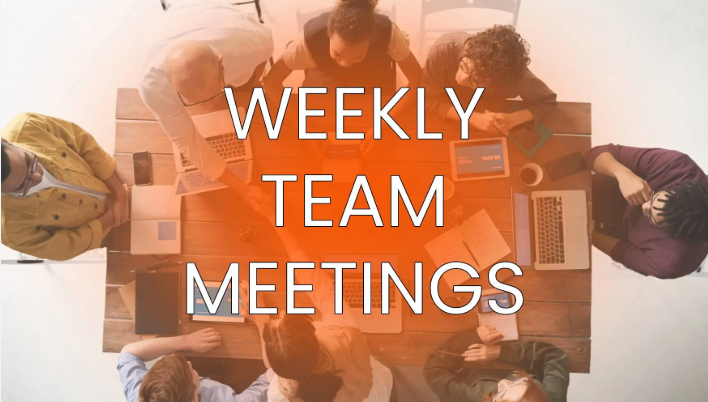
Many meetings fail for a simple reason: the presenter does all the work while everyone else watches. A polished deck may explain the topic clearly, but clarity alone does not create participation. People become engaged when they are asked to make a choice, interpret information, raise a concern, or help shape the next step.
The solution is not to fill every slide with animations or add a quiz for the sake of novelty. A more interactive meeting is designed around purposeful audience actions. Each activity should reveal useful information, improve a decision, or help participants apply what they have heard.
Here is a practical way to build that kind of meeting.
Start With the Decision, Not the Deck
Before opening presentation software, write down what the meeting needs to accomplish. A useful objective is specific enough to guide participation.
For example:
- Weak objective: Update the team on the launch.
- Better objective: Identify the two launch risks that need owners this week.
- Weak objective: Explain the new process.
- Better objective: Confirm that each team can apply the new process to a realistic case.
Once the objective is clear, decide what participants must do during the meeting. Do they need to vote, ask questions, compare options, practice a skill, or commit to an action? That verb should shape both the presentation and the interaction.
Use a Simple Three-Part Meeting Structure
Interactive meetings still need a clear narrative. A reliable structure is context, participation, and commitment.
1. Context
Give participants the minimum information they need to contribute. Explain the problem, show the relevant evidence, and define any constraints. Avoid turning this section into a long background lecture.
2. Participation
Ask the group to use the information. They might prioritize risks, respond to a scenario, submit questions, or discuss trade-offs in pairs. This is where the meeting changes from content delivery to collaborative work.
3. Commitment
Convert the discussion into a visible outcome. Record the decision, owner, deadline, unresolved question, or next experiment before moving on.
This structure works for project reviews, training sessions, town halls, client workshops, and planning meetings because it connects every interaction to a result.
Choose the Right Interaction for the Job
Different activities produce different kinds of input. Matching the format to the goal is more important than choosing the tool with the longest feature list.
Use a Poll to Take the Room’s Temperature
A quick poll can expose priorities or confidence levels at the start of a session. Ask a question that will affect what happens next, such as:
Which launch risk needs the most discussion today?
Show the result and respond to it. If the poll does not change the conversation, it is probably unnecessary.
Use Anonymous Q&A for Sensitive Topics
People may hesitate to ask about reorganization, policy changes, performance expectations, or project delays in public. Anonymous questions can lower that barrier. In a large meeting, upvoting can also help the facilitator address the concerns shared by the most participants.
Explain how questions will be moderated and what will happen to unanswered submissions. That small step makes the process more credible.
Use Scenarios to Test Application
After explaining a process, give the group a short situation and ask what they would do next. A sales team might choose how to respond to a client objection. New managers might evaluate a feedback conversation. A security training group might identify the safest response to a suspicious request.
Scenarios reveal whether people can apply an idea, not just repeat it.
Use a Word Cloud to Surface Language
Word clouds work best for short prompts with many possible answers:
- What is the biggest obstacle to adoption?
- What should customers feel after onboarding?
- Which skill do you most want to practice?
They are less useful when the group needs a precise decision. In that case, a ranked poll or structured discussion will produce clearer information.
Select Technology Around the Workflow
Some platforms are designed to create the main deck. Others add live polls, quizzes, Q&A, or audience response to an existing presentation. A third group focuses on clickable content and self-guided exploration.
Before choosing, compare:
- The type of participation you need
- Whether attendees can join without an account
- Support for in-person, remote, and hybrid delivery
- Integration with your presentation or meeting platform
- Anonymous response and moderation options
- Accessibility and mobile-device experience
- Reporting or response export requirements
- The quality of the participant experience on a weak connection
This overview of interactive presentation tools separates deck creation, live audience response, classroom participation, and nonlinear visual storytelling, making it easier to shortlist products by the job they perform.
Do not assume that one platform must handle every stage. A team can create and edit the core deck in one workspace, then add a specialist polling or Q&A layer for the live session.
Design Slides That Leave Room for Participation
An interactive meeting still needs good slides, but their role changes. Instead of carrying every word, slides should frame a question, present evidence, or make the group’s options easy to compare.
Try these principles:
- Put one decision or discussion prompt on a slide.
- Show only the data needed for that moment.
- Use clear labels for choices and trade-offs.
- Make participant instructions visible and brief.
- Keep response codes or join details on screen long enough to use.
- Add a transition slide that confirms what was decided.
If the deck begins with a report, brief, or long document, first reduce that material to a focused storyline. Then decide where audience input would improve understanding or change the outcome.
Plan Two or Three Meaningful Moments
More interaction is not always better. Too many activities can fragment the story and make a professional meeting feel like a sequence of unrelated exercises.
For a 30-minute session, two or three participation points are often enough:
- An opening diagnostic question
- A scenario, prioritization task, or Q&A in the middle
- A closing commitment or feedback prompt
Allow time to interpret responses. The value comes from what the group learns or decides, not from the act of clicking an answer.
Rehearse the Participant Experience
Test the full path before the meeting, especially for hybrid sessions. Open the join link on a phone, check whether a login is required, confirm that results display correctly, and test the presentation on the actual meeting platform.
Prepare a simple fallback as well. If the network fails, a show of hands, chat response, paired discussion, or shared document can keep the activity moving.
Accessibility should be part of the rehearsal. Check color contrast, readable text, keyboard access, captions for media, and whether participants have an alternative to using a personal device.
Close the Loop After the Meeting
Participation creates expectations. If people submit questions, ideas, or concerns, show how that input will be used.
After the session:
- Share the decision and assigned actions.
- Answer important questions that did not fit into the meeting.
- Summarize poll or survey findings when appropriate.
- Remove personal or sensitive response data that is no longer needed.
- Ask one short question about whether the format helped.
This follow-up turns interaction into trust. It also gives the facilitator evidence for improving the next meeting.
Frequently Asked Questions
How can I make a presentation more interactive?
Ask the audience to do something that supports the purpose of the session. Useful options include answering a diagnostic poll, choosing a response to a scenario, submitting anonymous questions, prioritizing alternatives, discussing an idea in pairs, or committing to a next action.
What is the best interactive tool for a business presentation?
The best choice depends on the required action. A polling and Q&A platform fits a town hall, while a clickable presentation may fit a self-guided product story. A deck-generation or editing tool is useful when the first challenge is organizing source material into a clear presentation.
Can PowerPoint presentations be interactive?
Yes. Presenters can add hyperlinks, branching navigation, embedded media, discussion prompts, or audience-response integrations. Test any add-in, join process, and network connection before the live session.
Final Takeaway
An interactive meeting is not defined by a particular app. It is defined by a clear purpose and a well-timed invitation to contribute. Start with the decision, choose an activity that produces useful input, and make the result visible. When the technology supports that workflow, a presentation stops being a broadcast and becomes a productive conversation.