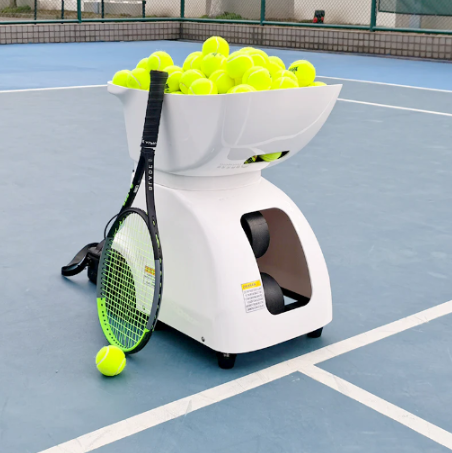
With so many training machines on the market, choosing the right one can feel more complicated than it needs to be. Specs, feature lists, and price points vary widely, and it’s easy to either overspend on capabilities you won’t use or underspend on something that won’t actually support meaningful improvement. The right choice comes down to understanding your own training habits and matching equipment to that reality, rather than chasing the most feature-heavy option available.
Start With How You Actually Practice
Before comparing specific machines, it helps to be honest about practice habits. Someone training three or four times a week at different locations has very different needs than someone practicing occasionally in one fixed spot. A portable tennis trainer designed for easy transport and setup matters far more for the first group, while the second group might prioritize other features like ball capacity or shot variety over portability.
This self-assessment step is easy to skip but genuinely changes which machine makes sense. Buying based on generic “best machine” rankings without factoring in your actual practice pattern often leads to owning equipment that doesn’t quite fit how you train.
See also: Finding the Right Therapist Near Me for Better Mental Wellness
Key Factors That Actually Matter
Weight and portability. If you’re moving the machine between courts or storing it away between sessions, this becomes one of the most important practical factors — more important, in many cases, than advanced features that go unused if the machine is inconvenient enough to discourage regular use.
Shot variety. Look for machines supporting multiple shot types rather than just varying speed on a single trajectory. Nine or more shot types provide enough variation to build a genuinely useful practice routine rather than repeating the same motion.
Ball capacity. Higher capacity reduces how often a session needs to pause for reloading, which matters more for longer or higher-intensity sessions than shorter, casual practice.
Control method. App and voice control let you adjust settings without physically returning to the machine between drills, keeping practice sessions efficient rather than interrupted by manual adjustments.
Upgrade potential. Since training needs evolve, a machine with a modular design that supports later upgrades protects your investment as your skill level and requirements change over time.
Matching Machines to Skill Level
Different stages of development benefit from different feature priorities, and understanding this helps avoid buying more (or less) machine than actually needed.
Beginners and developing players get the most value from adjustable speed, spin, and shot variety — the fundamentals that build consistent mechanics. Advanced tracking features add less value at this stage since basic technique is still being established.
Intermediate players working on consistency across multiple shot types benefit from machines offering broader shot variety and finer control over trajectory and pace, without necessarily needing full AI vision tracking yet.
Advanced and competitive players typically get the most value from systems incorporating vision-based tracking, adaptive drills, and performance data — features that support refining precision and reaction under more realistic, match-like conditions.
Understanding the Broader Technology Landscape
It’s worth taking a step back to understand where this category of equipment is heading overall. The shift toward smart training equipment reflects broader advances in computer vision, spatial sensing, and adaptive ball delivery that are increasingly common across racquet sports training tools, not just tennis-specific machines.
Understanding this trend matters for buying decisions because it clarifies what’s actually driving feature differences between machines at different price points — and helps set realistic expectations about which capabilities are genuinely useful for your current skill level versus which ones are built for a stage of training you haven’t reached yet.
Avoiding Common Buying Mistakes
A few patterns show up repeatedly among players unhappy with their machine choice:
- Buying based on feature lists alone, without considering whether those features fit actual training habits or current skill level.
- Underestimating the importance of portability, leading to a machine that’s technically capable but inconvenient enough to use less often than planned.
- Overlooking upgrade paths, resulting in needing a full replacement sooner than expected as training needs evolve.
- Assuming more expensive automatically means better fit, when in many cases a simpler machine matched to current needs delivers more practical value than an underused advanced system.
A Practical Approach to Deciding
Rather than starting with a specific model in mind, it helps to work through a simple sequence: identify your current skill level and training goals, assess how often and where you’ll realistically use the machine, then match those answers to the feature set that actually supports that pattern — rather than the one with the longest spec sheet.
Final Thoughts
Choosing the right tennis ball machine isn’t about finding the single “best” option on the market — it’s about matching equipment to how you actually train. Portability, shot variety, capacity, and upgrade potential all matter differently depending on skill level and practice habits, and understanding those priorities leads to a far better long-term investment than chasing whichever machine has the most advanced features on paper.
FAQs
1. What’s the most important factor when choosing a training machine? It depends on your practice habits, but portability, shot variety, and control method tend to affect day-to-day usability more than any single advanced feature.
2. Do beginners need machines with AI vision tracking? Not usually. Beginners typically benefit more from adjustable speed and shot variety, since advanced tracking features add the most value once basic mechanics are already established.
3. How much does ball capacity actually matter? It matters more for longer or higher-intensity sessions, where frequent reloading would otherwise interrupt training flow and momentum.
4. Is it worth paying more for a machine with upgrade potential? For players expecting to improve significantly over time, a modular design that supports later upgrades can be more cost-effective than needing a full replacement down the line.
5. Should I prioritize the most feature-heavy machine available? Not necessarily. Matching features to your current skill level and training habits usually delivers better practical value than choosing based purely on the longest spec list.