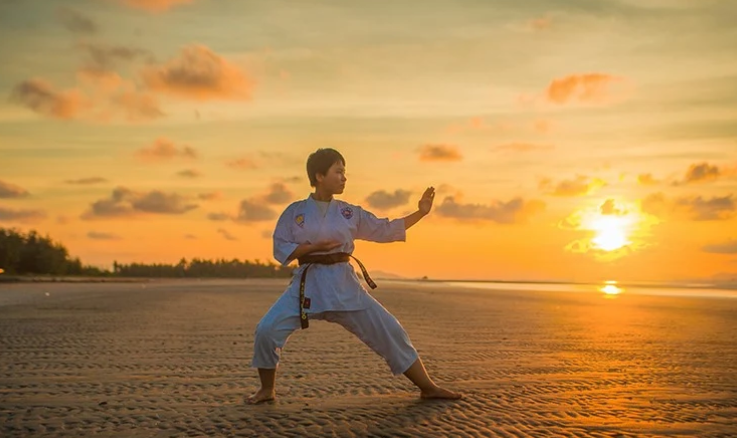
Teenagers need regular physical activity, but not every young person enjoys traditional team sports. Soccer, basketball, football, and volleyball can be excellent choices, but they are not the right fit for everyone. Some teens may feel uncomfortable with competition, large teams, tryouts, or the pressure of performing in front of others.
Martial arts offers another way for teenagers to stay active while developing physical and personal skills. Training can combine exercise, technique, discipline, concentration, confidence, and self-defense in one structured environment. For families searching for Teens martial arts near me, understanding these benefits can make it easier to decide whether martial arts could be a good fit for their teenager.
Martial Arts Gives Teens a Different Kind of Physical Activity
Martial arts can provide a demanding workout without requiring teenagers to participate in a traditional team game. Depending on the style and class structure, training may include kicking, punching drills, footwork, balance exercises, forms, conditioning, partner exercises, and controlled practice.
Teenagers can develop:
- Cardiovascular endurance
- Strength and muscular fitness
- Balance and coordination
- Flexibility
- Agility
- Speed
- Body control
- Overall physical confidence
Regular physical activity is important during adolescence, and martial arts can count as vigorous physical activity. The key is finding an activity that a teenager actually enjoys and will participate in consistently.
Teens Can Progress at Their Own Pace
One major difference between martial arts and many team sports is the way progress is often structured.
In a traditional team sport, a teenager may have a specific position and responsibilities based on the team’s needs. In martial arts, students generally work through techniques and skills according to their current experience and ability.
A beginner does not need to perform like an advanced student.
Instead, progress may involve:
- Learning basic movements
- Improving technique
- Building physical conditioning
- Practicing combinations
- Developing balance
- Learning more advanced techniques
- Working toward the next belt or level
This can make training particularly appealing to teens who prefer personal goals rather than constantly comparing themselves with teammates.
Martial Arts Builds Discipline Through Practice
Martial arts classes usually follow a structured routine. Students learn to listen to instructions, remember techniques, follow safety rules, practice repeatedly, and show respect toward instructors and training partners.
These habits can encourage discipline beyond the training environment.
For example, a teenager may gradually learn that improvement does not happen after practicing something once. It requires repetition and patience. That lesson can also apply to schoolwork, hobbies, music, and other activities.
The goal is not simply to make teenagers physically stronger. It is to teach them how consistent effort can produce progress.
Confidence Comes From Learning New Skills
Some teenagers are naturally confident, while others need more time to become comfortable in new environments. Martial arts can give teens opportunities to experience small achievements regularly.
A student might initially struggle with a particular movement but eventually perform it correctly. Later, they may learn a more complicated combination or successfully complete a new level of training.
These experiences can create a sense of accomplishment.
Confidence in martial arts does not have to mean being aggressive or wanting to fight. Instead, it can mean feeling more comfortable with one’s abilities, making decisions under pressure, and knowing that difficult skills can be learned with practice.
There Is Less Pressure to Be the “Best Player”
Team sports can sometimes create intense competition between players. A teenager may worry about making mistakes, losing a game, being placed on the bench, or not making the school team.
Martial arts can still involve competition, especially in programs that offer tournaments, but everyday training does not have to revolve around winning a team game.
Many classes focus more on individual development.
A teenager can ask:
“Am I better than I was last month?”
rather than:
“Am I better than everyone else?”
That change in mindset can make physical activity more enjoyable for teens who dislike highly competitive environments.
Martial Arts Can Still Provide Social Interaction
Choosing martial arts instead of a team sport does not mean a teenager has to exercise alone.
Martial arts classes are often highly social. Students may train with different partners, practice drills together, encourage one another, and work toward shared goals.
This can help teenagers develop communication and cooperation skills.
They may also meet students from different age groups, backgrounds, and experience levels. Over time, regular classes can create friendships and a sense of belonging.
For teenagers who are shy or simply do not enjoy large team sports, a martial arts class can offer social interaction in a more structured way.
Self-Defense Adds a Practical Dimension
Another feature that separates martial arts from many traditional sports is the opportunity to learn self-defense concepts.
Depending on the martial art, teenagers may learn about:
- Awareness
- Distance management
- Balance
- Blocking
- Escaping unsafe situations
- Controlled physical responses
- Situational decision-making
- De-escalation and avoidance
Good martial arts training should emphasize safety and responsible behavior rather than encouraging students to look for fights.
For teenagers, one of the most valuable lessons can be understanding that physical skills should be used responsibly and that avoiding unnecessary conflict is often the safest choice.
Focus and Concentration Are Part of Training
Martial arts requires students to pay attention to instructions and remember movements.
A teenager may need to remember the order of several techniques, respond to a training partner, maintain proper posture, and perform movements at the correct time.
This creates an environment where physical movement and mental concentration work together.
For teens who become bored with repetitive gym workouts, the constant learning involved in martial arts can make exercise more interesting.
Every class can introduce a different challenge.
Mistakes Become Part of the Learning Process
Teenagers can sometimes become frustrated when they do not immediately succeed at something. Martial arts provides many opportunities to experience mistakes in a controlled environment.
A student may forget a combination, lose balance, perform a technique incorrectly, or struggle with a new movement.
Instead of treating mistakes as failure, instructors can use them as opportunities for correction and improvement.
This teaches an important lesson: making a mistake does not mean you cannot succeed. It means you have something to practice.
That mindset can be useful both inside and outside the training facility.
Martial Arts Can Fit Different Personality Types
One reason parents consider Teens martial arts near me is that martial arts programs can offer different styles and training approaches.
Some teenagers may enjoy fast-paced striking activities. Others may prefer grappling, throws, forms, or technical practice.
Different martial arts may emphasize different skills, such as:
- Karate: technique, discipline, forms, and controlled striking
- Taekwondo: kicking techniques, movement, flexibility, and coordination
- Brazilian Jiu-Jitsu: grappling, positioning, and problem-solving
- Judo: throws, balance, movement, and controlled grappling
- Kickboxing: striking combinations, conditioning, and footwork
The right choice depends on the teenager’s interests, age, comfort level, goals, and the teaching approach of the program.
Training Can Encourage Healthy Competition
Martial arts does not eliminate competition completely. Instead, it can provide a different relationship with competition.
Some programs offer tournaments or controlled matches. These experiences can teach teenagers how to handle winning, losing, pressure, preparation, and sportsmanship.
At the same time, competition does not have to be the only reason to train.
A teenager can participate simply to:
- Improve fitness
- Learn self-defense
- Build confidence
- Develop discipline
- Learn a new skill
- Enjoy an active hobby
- Meet new people
This flexibility makes martial arts suitable for teens with different motivations.
Parents Should Look Beyond the Martial Art Style
When choosing a program, the specific martial art is important, but the quality of the training environment matters just as much.
Parents should consider whether the school provides:
- Qualified and experienced instructors
- Age-appropriate training
- Appropriate safety equipment
- Clean and organized training areas
- Clear rules about contact and sparring
- Respectful communication
- Proper supervision
- Beginner-friendly instruction
- A positive atmosphere
A teenager should feel challenged without feeling unsafe or constantly pressured.
The instructor’s attitude can have a major influence on the student’s experience.
Safety Should Always Come First
Martial arts is a physical activity, so safety should be treated seriously. Teenagers should learn techniques gradually and use appropriate protective equipment when required.
Parents can ask instructors about:
- How beginners are introduced to contact
- When sparring begins
- What protective equipment is required
- How injuries are handled
- How students are matched with training partners
- Whether techniques are modified for different experience levels
A responsible program should teach students to respect their training partners and understand their physical limits.
Martial Arts Does Not Have to Replace Team Sports Completely
Choosing martial arts does not necessarily mean giving up every team sport.
A teenager might enjoy playing basketball at school while attending martial arts classes once or twice a week. Another teen may participate in martial arts during one season and try another activity later.
Physical activity guidelines encourage young people to participate in a variety of age-appropriate activities. The most important factor is finding activities that keep teenagers moving and engaged.
Martial arts can therefore be an alternative, an addition, or simply another option.
How to Know If Martial Arts Is Right for Your Teen
Before enrolling, parents can talk with their teenager about what they actually want from an activity.
Ask questions such as:
- Do you enjoy individual challenges?
- Do you want to learn self-defense?
- Would you prefer skill development over team competition?
- Do you enjoy structured classes?
- Would you like to work toward belts or levels?
- Are you comfortable practicing with partners?
- Do you want a more physically challenging activity?
If the answers point toward these interests, martial arts may be worth exploring.
A trial class can also help a teenager understand the environment before making a long-term commitment.
Conclusion
Martial arts can be a strong alternative to traditional team sports for teenagers because it combines physical activity with skill development, discipline, concentration, confidence, and practical self-defense awareness.
While team sports provide valuable opportunities for cooperation and competition, not every teenager enjoys that environment. Martial arts gives young people another way to stay active while working toward individual goals and learning skills at their own pace.
For parents searching for Teens martial arts near me, the most important step is to look for a safe, respectful, age-appropriate program with instructors who understand how to work with teenagers. The right environment can make training enjoyable while helping teens develop abilities that can benefit them both inside and outside the training room.