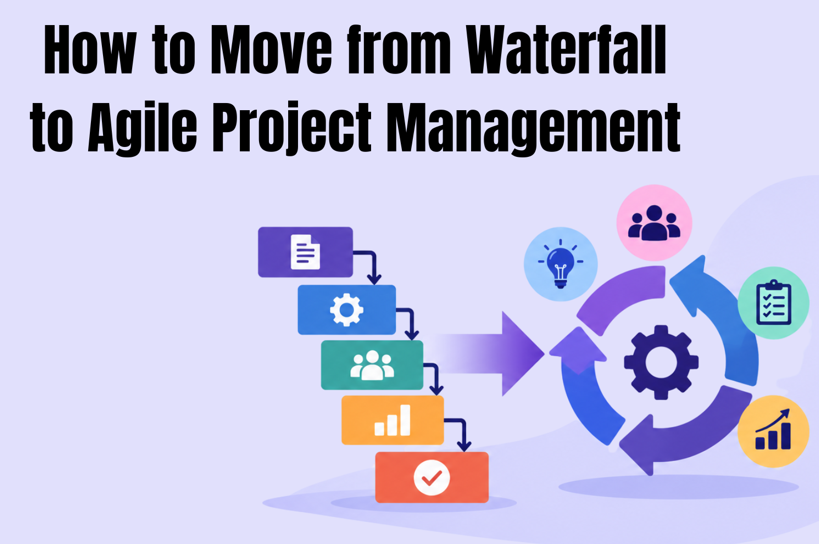
Whether a move to Agile succeeds depends on how carefully an organisation manages the transition. Switching from Waterfall is not simply about replacing one project method with another. Teams need to understand their current processes, learn new ways of working and take manageable steps towards change. Agile Training can help professionals develop the knowledge needed to understand Agile practices and responsibilities.
In this blog, we explain six steps that can help organisations move from Waterfall to Agile Project Management with greater clarity and control.
Key Steps to Move from Waterfall to Agile Project Management
Below are the key steps organisations can follow to move from Waterfall to Agile Project Management while helping teams understand and adapt to the new approach:
Assess Your Current Processes
The transition should begin with a clear understanding of how projects are currently managed. Organisations need to review existing Waterfall processes before deciding what should change.
Look at how requirements are collected, tasks are planned and progress is monitored. It is also useful to identify where delays, communication problems or rigid processes regularly appear.
This assessment provides a starting point for the transition. It helps organisations understand which existing practices still provide value and which areas may benefit from a more flexible approach. A clear assessment can also prevent unnecessary changes to processes that already work effectively.
Educate Your Team
Teams need to understand Agile before they apply it effectively. Simply introducing new terminology or changing meeting formats will not create an easy way of working.
Employees should understand how Agile approaches planning, collaboration, feedback and changing requirements. Agile Training can support this learning by helping professionals build practical knowledge of Agile Project Management.
Education also gives team members an opportunity to understand why the organisation is moving away from Waterfall. When people understand the purpose behind the change, they can participate more confidently and recognise how their everyday responsibilities may change.
Start Small
Changing every project at once can make the transition difficult to manage. Starting small gives teams time to understand new practices without creating unnecessary disruption across the organisation.
A suitable project or part of a project can be selected for the initial move towards Agile. This gives employees an opportunity to apply what they have learned in a controlled environment.
Starting small also allows organisations to identify difficulties before expanding the approach. Teams can learn from early experiences and use those lessons when Agile practices are introduced to other projects. This makes the wider transition easier to manage.
Choose the Right Framework
Agile includes different frameworks and ways of organising work. Organisations should avoid choosing one simply because it is widely used. The selected approach should suit the type of work, team structure and project requirements.
Before choosing a suitable framework, teams must take into account how work is organised, evaluated, and delivered. The ideal option should facilitate visibility and flexibility without unduly complicating already-existing duties.
When choosing a framework for their environment, professionals who are familiar with Agile Project Management may make better judgements. Instead of putting every project into the same framework, the goal should be to discover a method that facilitates teamwork.
Define Roles and Responsibilities
The distribution of duties within a project team may alter if Waterfall is abandoned. Employees may start to question who is responsible for choices or certain tasks if these changes are not made explicit.
As part of the transformation, organisations should clearly identify roles and responsibilities. Each team member should be aware of their responsibilities and how they contribute to the completion of the projec9Clear responsibilities also improve accountability and communication. People know who to approach when information, decisions or support are required. This can reduce uncertainty while enabling teams to operate more cooperatively under the new strategy.
See also: Streamlining Operations in Vacation Rental Management Businesses
Monitor Progress and Foster a Culture of Continuous Improvement
Once Agile practices are implemented, the transition is not complete. Organisations must keep monitoring developments to see whether the new strategy is genuinely enhancing project management.
Teams should evaluate what is working and where problems still exist on a frequent basis. Employee feedback might highlight issues that might not be apparent from project outcomes alone.
Continuous improvement is also aided by monitoring. Organisations can use experience to enhance team performance rather than viewing the first Agile approach as permanent. Lessons learned from finished tasks can direct future choices and make procedures more appropriate for the demands of the organisation.
Conclusion
Moving from Waterfall to Agile Project Management requires careful preparation rather than an immediate change in working methods. Assessing current processes, educating teams, starting small, selecting a suitable framework, defining responsibilities and monitoring progress can make the transition more manageable.
Choosing Agile Training from The Knowledge Academy, a recognised global training provider, can help professionals develop practical knowledge for flexible and collaborative project delivery.