Driving after sunset presents unique challenges for every driver. Navigating open highways or busy city streets becomes significantly harder when daylight fades.
The biggest hazard drivers face after dark is harsh headlight glare. Modern vehicles often feature bright LED and xenon headlights. While these lights help drivers see further, they can blind oncoming traffic.
If glare makes your evening commute stressful, you are not alone. Choosing the right eyewear can help reduce glare, improve contrast, and make your late-night trips much safer.
1. Why Night Driving Glare Happens
Understanding why glare affects your eyes is the first step toward clearer vision. When darkness falls, your pupils naturally dilate to let in more light.
Larger pupils make your eyes more sensitive to sudden flashes of bright light. When an oncoming car passes with high beams, the intense light rays scatter across your eye’s internal lens.
This light scattering creates several visual issues:
- Starbursts that radiate outward from headlights and streetlamps.
- Halos or bright rings surrounding overhead light fixtures.
- Temporary blindness that lasts a few critical seconds after a bright car passes.
- Physical eye fatigue caused by constant squinting and straining.
Rainy weather worsens these effects. Wet asphalt reflects artificial light like a mirror, creating double reflections that make lane lines hard to spot.
See also: Finding the Right Therapist Near Me for Better Mental Wellness
2. Key Features of Effective Driving Eyewear
Not all glasses are suitable for nighttime use. Choosing improper lenses can actually make road hazards harder to see in low-light environments.
The single most important feature for night glasses is an anti-reflective (AR) coating. An anti-reflective layer stops light from bouncing off the front and back surfaces of your lenses.
By eliminating reflections, AR coatings allow up to 99 percent of available light to pass directly into your eyes. This results in sharper contrast without distracting halos around streetlights.
To learn more about finding the right pair for low-light trips, reading a complete guide on night driving glasses gives you a clear look at lens coatings, frame fits, and safety standards.
You can also explore modern tech-enhanced frames for your commute. Looking into high-tech smart eyewear for men gives you comfortable frames equipped with hands-free audio features for navigation prompts.
3. The Myth of Yellow Tinted Lenses
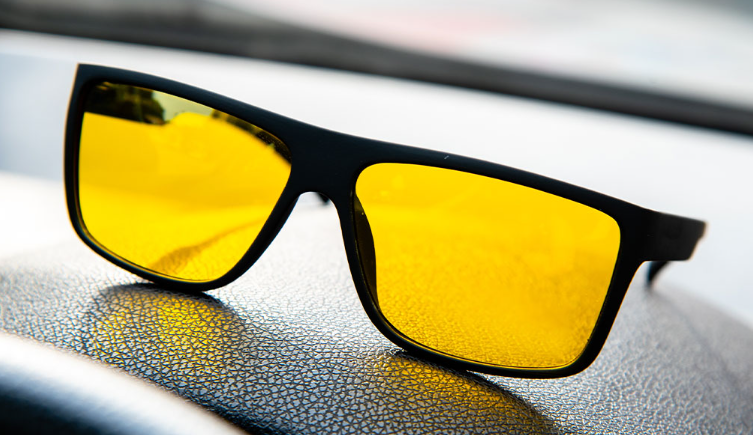
Many drivers believe that wearing bright yellow-tinted glasses is the best way to block night glare. While yellow lenses are popular, it is important to understand how they work.
Yellow lenses work by filtering out high-energy blue light rays. They boost visual contrast on foggy, overcast, or hazy afternoons, making objects look sharper in flat light.
However, yellow lenses also block a portion of overall light from reaching your eyes. During dark nighttime conditions, reducing available light can lower your overall visual clarity.
Here is how different lens types perform after dark:
- Clear lenses with anti-reflective coating: The safest choice for night driving. They eliminate glare while letting maximum light enter your eye.
- Light yellow lenses: Useful for twilight or foggy conditions, but best used cautiously in total darkness.
- Dark tinted or polarized sunglasses: Never wear sunglasses at night. They block far too much light and create severe safety risks.
For general night driving, clear lenses paired with a high-grade anti-reflective treatment offer the safest balance of clarity and glare reduction.
4. Simple Maintenance and Driving Habits for Safer Vision
Wearing the right glasses is essential, but proper care and good habits make an even bigger difference on dark roads. Clean surfaces minimize reflection before light even reaches your eyes.
First, keep your eyeglass lenses completely clean. Smudges, dust, and oily fingerprints scatter light waves, turning small bright spots into large, blinding glare patches. Clean your lenses daily with a microfiber cloth and dedicated lens cleaner.
Second, clean your vehicle’s windshield inside and out. Dirt and residue build up on the inside of car glass over time, creating a hazy film that intensifies headlight glare.
Third, adjust your rearview mirror to the night position. Flipping the tab on manual mirrors—or turning on auto-dimming features—prevents high beams behind you from bouncing directly into your eyes.
Finally, look slightly down and toward the right edge of your lane when an oncoming vehicle approaches with bright lights. Focusing on the white lane line keeps you on track without looking directly at blinding lights.
Frequently Asked Questions
Do anti-reflective coatings really help with night driving glare?
Yes, anti-reflective coatings allow maximum light to pass through your lenses while preventing internal reflections that cause distracting starbursts and halos around bright headlights.
Should I wear polarized sunglasses for night driving?
No, you should never wear polarized sunglasses at night. Polarized sunglasses block significant amounts of light, making it very difficult to see dark road hazards, pedestrians, and street signs.
Why do bright headlights seem worse now than in the past?
Modern vehicles frequently use LED and xenon headlights, which produce higher color temperatures and intense light. These bright light sources create stronger visual contrast and glare for oncoming drivers.
How do I know if my prescription glasses have an anti-reflective coating?
Hold your glasses near a light fixture. If the reflection off the lens surface shows a subtle green or purple tint, your glasses have an anti-reflective coating. Pure white reflections indicate standard uncoated lenses.
Can I use prescription glasses for night driving?
Yes, using an up-to-date prescription with an added anti-reflective coating is the most effective way to correct vision defects and minimize night glare simultaneously.
Conclusion
Driving at night does not have to be a stressful or blinding experience. Understanding how glare affects your eyes helps you take active steps to protect your vision on the road.
Choosing clear lenses equipped with a quality anti-reflective coating reduces light scattering and keeps your focus sharp. Combining proper eyewear with clean windshields and safe driving habits creates a much safer ride.
Take control of your night driving comfort today. Equip your vehicle with proper glare-reducing eyewear and enjoy clear, confident vision on every evening journey.